Content AI 2.0: Powerful AI SEO Inside WordPress

Content AI 2.0 represents a major step toward bringing artificial intelligence directly into the WordPress content workflow. Instead of relying on separate tools for research, writing, optimization, SEO analysis, metadata, and content improvement, publishers can use AI assistance much closer to the place where their content is actually created and published.
For bloggers, technology publishers, businesses, marketers, agencies, affiliate websites, and independent creators, this approach can simplify several repetitive parts of content production. The objective is not simply to generate more words. The bigger opportunity is to create a more organized workflow from topic discovery to final SEO review.
Modern SEO requires much more than placing a keyword inside an article. A useful page needs to understand search intent, provide accurate information, use a logical structure, offer good readability, connect to relevant resources, use appropriate images, and give readers a reason to stay on the page.
That is where Content AI 2.0 becomes interesting for WordPress users. AI can assist with many of the repetitive tasks surrounding content creation while the publisher remains responsible for strategy, accuracy, originality, and final editorial quality.
In this complete guide, we will explore how Content AI 2.0 fits into WordPress SEO, how AI-assisted research and writing can improve a publishing workflow, how to use focus keywords correctly, how internal and external links fit into an SEO article, and why human review remains essential.
- What Is Content AI 2.0?
- Why AI SEO Inside WordPress Matters
- How Content AI 2.0 Works
- Keyword Research With Content AI 2.0
- Search Intent and Topic Research
- Content Planning and Article Outlines
- Writing With Content AI 2.0
- AI Research and RankBot
- Content Optimization and SEO Tests
- SEO Titles and Meta Descriptions
- Images and Alt Text
- Internal Linking
- External Links
- Readability and User Experience
- Long-Form Content and AI
- The Complete WordPress AI SEO Workflow
- Common Mistakes to Avoid
- Why Human Review Still Matters
- The Future of AI SEO in WordPress
- Frequently Asked Questions
- Conclusion
What Is Content AI 2.0?
Content AI 2.0 is an AI-powered content and SEO workflow associated with Rank Math and WordPress. It was designed to help publishers create, research, improve, and optimize content without constantly moving between different applications.
The concept is straightforward. A writer creates a WordPress article, identifies a topic and target keyword, and then uses AI assistance for different stages of the content process.
Instead of thinking about AI as one giant “write my article” button, it is more useful to think about it as a collection of smaller assistants.
One assistant can help with ideas.
Another can help with research.
Another can help with outlines.
Another can help rewrite a paragraph.
Another can help with SEO metadata.
Another can help identify optimization opportunities.
This modular approach makes AI more useful in real publishing workflows because professional writing involves many small decisions rather than one single writing action.
Rank Math originally introduced Content AI 2.0 as a rebuilt AI writing and SEO workflow designed to work inside WordPress editors and its dedicated Content Editor. Its launch documentation described more than 40 AI writing tools, research capabilities, RankBot, content optimization tools, and AI-generated SEO metadata. Read the original Rank Math Content AI 2.0 announcement.
Why AI SEO Inside WordPress Matters
WordPress is already a powerful publishing platform, but content creation often involves many separate tools.
A typical publisher might research keywords in one application, brainstorm ideas in another, write the article in an AI chatbot, copy the result into WordPress, check SEO in a plugin, search for internal links manually, create metadata somewhere else, and then return to WordPress for final editing.
Every additional step creates friction.
AI integration can reduce some of that friction.
When AI assistance exists inside the publishing environment, writers can work closer to the final article instead of repeatedly copying information between platforms.
This is particularly useful for small websites.
A solo publisher may be responsible for research, writing, editing, SEO, images, internal linking, publishing, and promotion. AI assistance can reduce repetitive work and give the publisher more time to focus on decisions that require human judgment.
However, speed should not become the only goal.
Publishing ten low-quality articles is not necessarily better than publishing two genuinely useful resources.
The real value of AI SEO is the ability to improve the workflow while maintaining quality.
How Content AI 2.0 Works
The basic workflow can be divided into several stages:
- Topic discovery – decide what the audience needs.
- Keyword research – identify the main search phrase and related concepts.
- Research – understand the subject and search intent.
- Planning – build a logical article structure.
- Writing – create the first draft.
- Optimization – improve SEO elements and readability.
- Linking – connect the article to useful internal and external resources.
- Review – verify facts and improve the final article.
- Publishing – publish the page after final checks.
- Updating – maintain the article as information changes.
Content AI can assist with several of these stages, but the exact features available can change as Rank Math continues to update its product.
For example, Rank Math’s current changelog shows that its AI functionality continued evolving in 2026, including the introduction of a new AI agent replacing the older Content AI Chat experience. View the current Rank Math changelog.
This is important for publishers because AI tools are moving quickly. A tutorial written several years ago may not perfectly describe the current interface.
Keyword Research With Content AI 2.0
Keyword research is one of the most important stages of SEO because it helps publishers understand the language people use when searching for information.
For this article, the main focus keyword is:
Content AI 2.0
The focus keyword is important, but it should not be repeated unnaturally.
Modern content should also cover related concepts.
For example, an article about Content AI 2.0 may naturally discuss:
- AI SEO
- WordPress SEO
- AI content creation
- AI writing tools
- keyword research
- SEO optimization
- meta descriptions
- SEO titles
- internal linking
- content optimization
- AI assistants
- search intent
These concepts help explain the topic naturally.
The goal should not be to force every related phrase into the article.
Instead, use relevant terminology where it improves the explanation.
Google’s official SEO guidance recommends creating useful content for people and making pages easy for search engines to understand. Read Google’s SEO Starter Guide.
Search Intent and Topic Research
Before writing an article, it is important to understand what the reader expects.
Search intent is the reason behind a search query.
Someone searching for “What is Content AI 2.0?” wants an explanation.
Someone searching for “Content AI 2.0 tutorial” wants instructions.
Someone searching for “Content AI pricing” may be researching a purchase decision.
Someone searching for “Content AI WordPress” may want to understand how the feature works inside WordPress.
These users may search for similar terms but expect different pages.
AI can help brainstorm questions and possible subtopics, but writers should still inspect the actual subject carefully.
A useful article should answer the questions that matter to its audience instead of simply trying to increase its word count.
Search-intent checklist
- What does the reader want to learn?
- Is the reader looking for instructions?
- Does the reader need examples?
- Does the reader need a comparison?
- Does the reader need official documentation?
- What questions should the article answer?
Content Planning and Article Outlines
One of the most practical uses of AI is content planning.
A long article becomes much easier to write when the structure is decided before the drafting stage.
For example, this article begins with the definition of Content AI 2.0, then moves into its role in WordPress, keyword research, search intent, writing, optimization, images, links, readability, workflow, mistakes, and frequently asked questions.
That structure gives the reader a logical path.
Without a clear outline, long-form content can easily become repetitive.
The same idea may be explained several times, while important topics are accidentally skipped.
AI-generated outlines can reduce this problem.
But an AI outline should be edited before writing.
Ask whether every section deserves to exist.
If two sections explain the same idea, combine them.
If an important reader question is missing, add it.
This produces a stronger article than simply accepting the first AI-generated outline.

Writing With Content AI 2.0
AI writing is often discussed as though the only purpose is generating complete articles.
In professional publishing, however, smaller AI writing tasks can be more useful.
A writer might use AI to:
- generate headline ideas;
- create an introduction;
- expand a short explanation;
- rewrite a complicated paragraph;
- simplify technical language;
- create an FAQ;
- write a conclusion;
- summarize a section;
- improve grammar;
- create social media copy;
- suggest metadata.
This allows the human writer to remain in control of the article.
Instead of handing the entire article to AI, the publisher can use AI where it provides the most value.
This is especially useful when the writer already understands the subject.
The human provides the knowledge and direction.
AI helps with speed and structure.
The editor then reviews the final result.
AI Research and RankBot
RankBot is one of the AI-assisted research features associated with Rank Math’s Content AI ecosystem.
It is designed to act as an AI assistant inside the WordPress content workflow and can be used for questions, research, and gathering ideas.
For example, while preparing an article about WordPress SEO, a publisher could use an AI assistant to brainstorm:
- common beginner questions;
- possible article sections;
- examples of SEO workflows;
- questions about keyword optimization;
- ideas for FAQs;
- content gaps to investigate.
Rank Math’s documentation describes RankBot as a personal AI assistant within the WordPress editor for research and gathering insights. Read the official Content AI overview.
However, AI research should not automatically be considered a primary source.
If an AI assistant provides a statistic, product feature, legal claim, technical specification, or current fact, verify it against an authoritative source before publication.
Content Optimization and SEO Tests
After writing the article, the next stage is optimization.
This is where WordPress SEO plugins can provide useful diagnostics.
A content analysis system may check whether a focus keyword appears in important areas such as the SEO title, content, headings, URL, and other relevant elements.
For example, a basic SEO workflow for this article checks:
- Focus keyword in the SEO title
- Focus keyword in the meta description
- Focus keyword in the URL
- Focus keyword near the beginning of the article
- Focus keyword inside the content
- Focus keyword in relevant subheadings
- Focus keyword in at least one image alt attribute
- Natural keyword usage throughout the article
- Internal links
- External links
- Readability
These checks can be useful, but they should be treated as guidelines rather than instructions to manipulate the article.
A sentence should not become awkward simply to satisfy a keyword test.
Rank Math’s Content AI documentation describes AI-assisted SEO research, keyword recommendations, metadata generation, and optimization features. Learn how Rank Math describes Content AI for SEO.
SEO Titles and Meta Descriptions
The SEO title is one of the most visible elements associated with a search result.
For this article, the recommended SEO title is:
Content AI 2.0: Powerful AI SEO Inside WordPress
The focus keyword appears at the beginning.
The title also communicates the subject immediately.
The recommended meta description is:
Content AI 2.0 brings powerful AI SEO tools into WordPress for keyword research, content optimization, SEO fixes, meta tags, internal linking, and smarter content creation.
A good meta description should explain what the page offers rather than simply repeating the title.
Search engines may generate snippets differently depending on the search query and page content, so a meta description should be viewed as useful page metadata rather than a guaranteed search-result sentence.
Learn more about Google’s search snippets.
Images and Alt Text
Images make long-form content easier to scan and can provide visual context.
However, images should be relevant.
Adding random stock photographs simply to increase the image count does not automatically improve an article.
For this article, five supporting images can be distributed across the major sections.
This is the primary article image and can also satisfy the requirement for the exact focus keyword in an image alt attribute.

This image works well near the content-planning and writing sections.

This image fits naturally near the SEO optimization section.

This image works well near the workflow section.
Alt text should describe the image accurately. Avoid inserting the same keyword into every image’s alt text.
Google provides specific guidance for helping search engines understand images and image context. Read Google’s image SEO documentation.
Internal Linking
Internal linking connects related pages on the same website.
For a growing technology website, internal links can create a connected content ecosystem instead of leaving every article isolated.
For this GrayGaps article, four contextual internal links are appropriate.
When discussing AI coding and automated development, readers can explore AI coding agents in 2026.
When discussing the broader concept of autonomous AI systems, readers can explore AI agents.
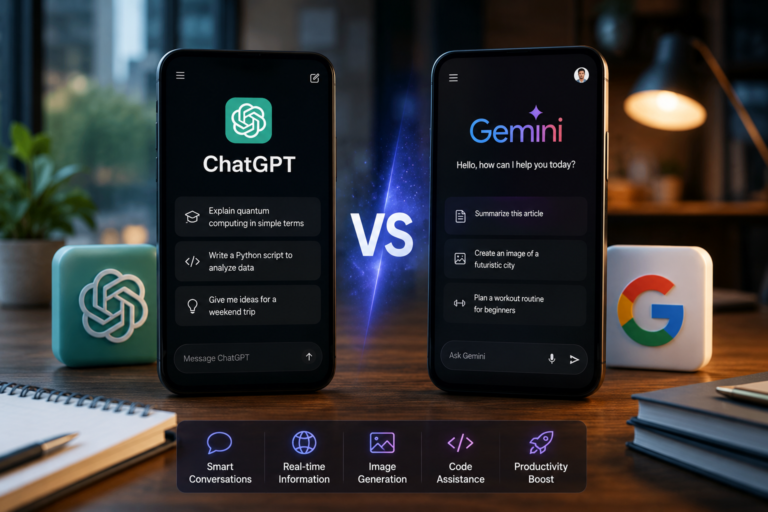
When discussing generative AI assistants and major AI platforms, readers can explore ChatGPT vs Gemini in 2026.
When discussing digital technology and connectivity, readers can explore why 4G internet can be slow even with full signal.
Internal links used in this article
Four internal links are sufficient for the current version because they are relevant to the supplied GrayGaps content. Additional internal links can be added when more closely related articles are published.
Google recommends using crawlable links and descriptive anchor text so that users and search engines can understand where links lead. Read Google’s guidance on crawlable links.
External Links
External links can provide additional context and give readers access to authoritative resources.
This article links to official Google and Rank Math resources instead of relying only on third-party explanations.
Useful resources include:
- Google SEO Starter Guide
- Google Search Essentials
- Google Search Snippet Documentation
- Google Image SEO Documentation
- Rank Math Content AI 2.0 Announcement
- Rank Math Content AI Overview
- Rank Math Content AI SEO Guide
These are normal clickable links and are not marked with nofollow, sponsored, or ugc.
Readability and User Experience
SEO is not only about search engines.
Readers need to understand the article quickly.
This becomes particularly important when publishing long-form content.
A 5,000-word article made entirely from large paragraphs can be difficult to read on a smartphone.
Short paragraphs solve part of the problem.
Clear headings solve another part.
Lists make complicated information easier to scan.
Images create visual breaks.
A table of contents helps readers jump to the section they actually need.
Internal links provide additional reading opportunities.
Good readability therefore supports both usability and content organization.
| SEO Element | Recommended Approach |
|---|---|
| Focus Keyword | Content AI 2.0 |
| SEO Title | Content AI 2.0: Powerful AI SEO Inside WordPress |
| Meta Description | Content AI 2.0 brings powerful AI SEO tools into WordPress for keyword research, content optimization, SEO fixes, meta tags, internal linking, and smarter content creation. |
| URL Slug | content-ai-2-0-wordpress |
| Internal Links | 4 relevant GrayGaps links |
| External Links | Google and Rank Math documentation |
| Images | Featured image + 5 article images |
Long-Form Content and AI
Long-form content can be useful when a topic genuinely requires detailed explanation.
Content AI 2.0 is a suitable subject for long-form content because it involves multiple areas of SEO and publishing.
A comprehensive article can discuss:
- what Content AI 2.0 is;
- how it fits into WordPress;
- keyword research;
- search intent;
- AI writing;
- research;
- content outlines;
- SEO optimization;
- metadata;
- images;
- internal linking;
- external resources;
- readability;
- content updates;
- human review.
That is a legitimate reason for a long article.
But word count should never be the only objective.
A 1,500-word article that completely answers a simple question can be more useful than a 7,000-word article that repeats the same information.
The right length depends on the topic, search intent, audience, and amount of useful information available.
The Complete WordPress AI SEO Workflow
Step 1: Select the Topic
Begin with a clear topic that fits the website.
For this article, the topic is AI SEO inside WordPress.
Step 2: Choose the Focus Keyword
Select the main phrase that best represents the article.
For this article, the focus keyword is Content AI 2.0.
Step 3: Research Search Intent
Understand what readers expect from the topic.
Do not begin writing before you know what the article is supposed to accomplish.
Step 4: Build the Outline
Use H2 and H3 headings to organize the article.
Step 5: Write the Draft
Use AI assistance where appropriate, but add original explanations and practical examples.
Step 6: Edit the Draft
Remove repetition and generic language.
Step 7: Verify Information
Check important facts against reliable sources.
Step 8: Optimize the SEO Elements
Review the SEO title, meta description, URL, headings, focus keyword, images, and links.
Step 9: Add Internal Links
Connect the article to relevant GrayGaps pages.
Step 10: Add External Resources
Link to authoritative documentation where it improves the article.
Step 11: Add Images
Place images near sections where they provide useful context.
Step 12: Check Mobile Design
Preview the article on a smartphone.
Check whether the headings, paragraphs, tables, images, and links are easy to use.
Step 13: Run the SEO Analysis
Review Rank Math recommendations.
Fix useful issues without damaging readability.
Step 14: Perform a Final Human Review
Read the entire article from beginning to end before publishing.
Step 15: Monitor and Update
After publication, monitor performance and update the article when the underlying information changes.
Common Mistakes to Avoid
1. Publishing the First AI Draft
The first AI-generated version should almost never be considered the final version.
Review the language, facts, examples, and structure before publication.
2. Keyword Stuffing
Do not repeat Content AI 2.0 in every paragraph just to increase keyword density.
Use the keyword naturally and explain related concepts using normal language.
3. Writing Only for an SEO Score
SEO plugin scores are useful diagnostics, not the final definition of content quality.
A perfect score does not automatically mean an article is useful.
4. Ignoring Search Intent
Always understand why the reader is searching for the topic.
5. Using Generic AI Examples
Add practical examples that match the website’s audience.
6. Forgetting Internal Links
Connect the article with related pages when the links genuinely help the reader.
7. Adding Irrelevant External Links
External links should provide useful context.
8. Using Keyword-Stuffed Alt Text
Alt text should describe the image accurately.
9. Ignoring Mobile Users
Always check the final article on a smartphone.
10. Believing AI Guarantees Rankings
No AI tool can guarantee a specific Google ranking.
Why Human Review Still Matters
AI can generate text quickly, but speed is not the same as editorial quality.
Human review is necessary because an editor understands the context of the publication.
A human editor can identify:
- unsupported claims;
- incorrect information;
- outdated details;
- awkward wording;
- repetitive sections;
- weak examples;
- missing context;
- poor transitions;
- unnecessary sections.
Human review is also important for brand voice.
Two websites can use the same AI tool and produce completely different results if their editors have different standards.
The best approach is therefore not “AI replaces the writer.”
A more practical approach is:
Human strategy + AI assistance + human editing.
Content AI 2.0 for Bloggers
Bloggers can use AI assistance for many repetitive tasks.
For example, a blogger can start with a topic idea, generate possible subtopics, create an outline, draft sections, improve readability, generate metadata, and review SEO recommendations.
This can reduce the time required to move from an idea to a structured article.
However, bloggers should still add personal experience, examples, original research, or other useful information wherever possible.
Content AI 2.0 for Technology Websites
Technology publishers have a particularly strong use case for AI-assisted workflows because technology topics often involve complicated terminology and rapidly changing information.
AI can help explain technical concepts, create outlines, simplify language, and organize large amounts of information.
But technology publishers must be especially careful with accuracy.
Software features change.
Product names change.
Pricing changes.
Version numbers change.
AI tools themselves change.
Therefore, current information should be verified before publication.
Content AI 2.0 for Business Websites
Businesses can use AI-assisted content workflows for blog posts, educational articles, landing pages, FAQs, product explanations, and marketing material.
The biggest advantage may be consistency.
A company can establish a content style and then use AI to accelerate repetitive writing tasks while editors maintain the brand’s standards.
However, business websites should avoid publishing generic AI copy that does not demonstrate real knowledge of the company’s products or customers.
Content AI 2.0 for Agencies
Agencies managing multiple websites can use structured AI workflows to reduce repetitive work.
For example, an agency could establish a standard process:
- Research client topic.
- Identify search intent.
- Create content brief.
- Generate outline.
- Draft content.
- Apply brand guidelines.
- Run SEO checks.
- Add internal links.
- Add external sources.
- Perform human review.
- Send for client approval.
The important part is maintaining editorial quality across every client.
How to Maintain Brand Voice With AI
One potential problem with AI writing is that different websites can start sounding similar.
The solution is a clear editorial style.
Before using AI extensively, define the publication’s preferred voice.
For example:
- professional;
- clear;
- simple English;
- short paragraphs;
- practical examples;
- limited jargon;
- fact-focused explanations;
- useful headings;
- reader-first writing.
AI output can then be edited to match those standards.
The objective should be to make AI assistance feel natural rather than making the article sound like an AI-generated document.
What Content AI 2.0 Cannot Guarantee
Even a sophisticated AI content workflow cannot guarantee:
- first-page rankings;
- top search positions;
- backlinks;
- website authority;
- accurate information without verification;
- high conversion rates;
- fast page speed;
- good technical SEO;
- reader trust.
SEO is broader than content generation.
A successful website needs good content, technical accessibility, useful navigation, strong user experience, relevant links, and ongoing maintenance.
The Future of AI SEO in WordPress
The most interesting part of AI SEO is not simply that AI can write paragraphs.
AI-generated text is already widely available.
The bigger development is workflow integration.
Imagine a WordPress publishing environment where the writer can research a topic, understand related questions, build an outline, draft sections, improve content, generate metadata, optimize images, discover internal links, and update older articles from one connected environment.
This could reduce the amount of repetitive work required to maintain a professional website.
At the same time, more automation creates a greater need for oversight.
If AI is allowed to perform more actions automatically, publishers need to understand what is being changed and why.
The future is therefore likely to involve a combination of automation and human control.
AI handles repetitive tasks.
Humans handle judgment.
That combination can create a much stronger publishing workflow than either approach alone.
Content AI 2.0 and the Changing SEO Workflow
Traditional SEO workflows often required several separate tools.
One tool was used for keyword research.
Another was used for content writing.
Another was used for grammar.
Another was used for SEO.
Another was used for metadata.
Another was used for internal links.
Another was used for content analysis.
AI is gradually bringing some of these tasks closer together.
That does not mean every tool will disappear.
Instead, the publishing workflow may become more integrated.
WordPress users can benefit from this because WordPress remains the place where the final content is created, edited, and published.
How to Use Content AI 2.0 Responsibly
A responsible AI content workflow follows a few simple principles.
Verify Important Information
Do not assume AI-generated facts are automatically correct.
Keep Originality
Add your own explanations, examples, research, and experience.
Protect the Reader Experience
Do not sacrifice readability to satisfy an SEO checklist.
Use Keywords Naturally
Keyword placement should support the topic rather than interrupt the writing.
Review AI Changes
Whenever AI suggests a change, check whether the change actually improves the page.
Update Content
AI and SEO tools change quickly. Keep important articles current.
Frequently Asked Questions
What is Content AI 2.0?
Content AI 2.0 is an AI-powered content and SEO workflow associated with Rank Math that brings AI-assisted research, writing, optimization, and metadata features closer to WordPress publishing.
Is Content AI 2.0 built for WordPress?
Yes. Rank Math’s documentation describes Content AI as an AI assistant that works within WordPress and integrates with supported WordPress editors and Rank Math’s content tools.
Can Content AI 2.0 write blog posts?
Yes. Content AI includes AI-assisted writing capabilities for different parts of the content creation process, including ideas, research, outlines, introductions, conclusions, and other writing tasks.
Can Content AI 2.0 help with SEO?
Yes. Content AI is designed to support SEO-related tasks such as keyword research, content optimization, metadata generation, and SEO recommendations.
Can Content AI 2.0 fix SEO errors?
Rank Math’s documentation describes AI-assisted options for addressing certain failed SEO tests. The generated change should still be reviewed before publication.
Can Content AI 2.0 create SEO titles?
Yes. Rank Math documents AI-assisted SEO title and meta description generation.
Can Content AI 2.0 generate meta descriptions?
Yes. AI can assist with generating SEO descriptions that can then be reviewed and edited by the publisher.
Does Content AI 2.0 guarantee Google rankings?
No. AI tools cannot guarantee a specific ranking position. Search visibility depends on many factors, including relevance, quality, technical accessibility, competition, links, and search-system behavior.
Should AI-generated content be published without editing?
No. AI-generated content should be reviewed for accuracy, originality, clarity, usefulness, and current information before publication.
How many internal links should this article have?
This version uses four relevant GrayGaps internal links. More can be added naturally as additional related GrayGaps articles become available.
How many images should a long article have?
There is no universal SEO requirement. For this article, the featured image plus five supporting images provide visual breaks and support the main sections.
Should the focus keyword appear in every heading?
No. The focus keyword should appear naturally in relevant headings, but forcing the exact phrase into every heading can make the article unnatural.
What is the best way to use Content AI 2.0?
The most practical approach is to use AI for research, planning, drafting, optimization, and repetitive tasks while keeping human review as the final quality-control stage.
Conclusion: The Role of Content AI 2.0 in Modern WordPress SEO
Content AI 2.0 represents the broader movement toward AI-assisted publishing inside WordPress.
Its importance is not simply the ability to generate text.
The bigger opportunity is workflow integration.
A publisher can move from topic discovery to keyword research, research, planning, writing, SEO optimization, metadata, images, internal links, external resources, and final review in a more connected process.
This can make content production faster and more organized.
But automation should not replace editorial responsibility.
The publisher still needs to verify important claims, remove inaccurate information, maintain originality, protect the reader experience, and ensure that every article provides genuine value.
The most effective approach is therefore simple:
Use AI for efficiency. Use human expertise for quality.
When those two elements work together, Content AI 2.0 can become more than an AI writing tool. It can become part of a structured WordPress SEO workflow that helps publishers research better, write faster, optimize more efficiently, and maintain useful content over time.
Questions & Answers
Have a question about this article? Ask it below. Other GrayGaps readers can share their experience and help answer it.